Stinging insect activity in Dallas County surges from late April through October, driven by high humidity and prolonged ambient heat above 90 degrees Fahrenheit. Species such as the common Texas red paper wasp…
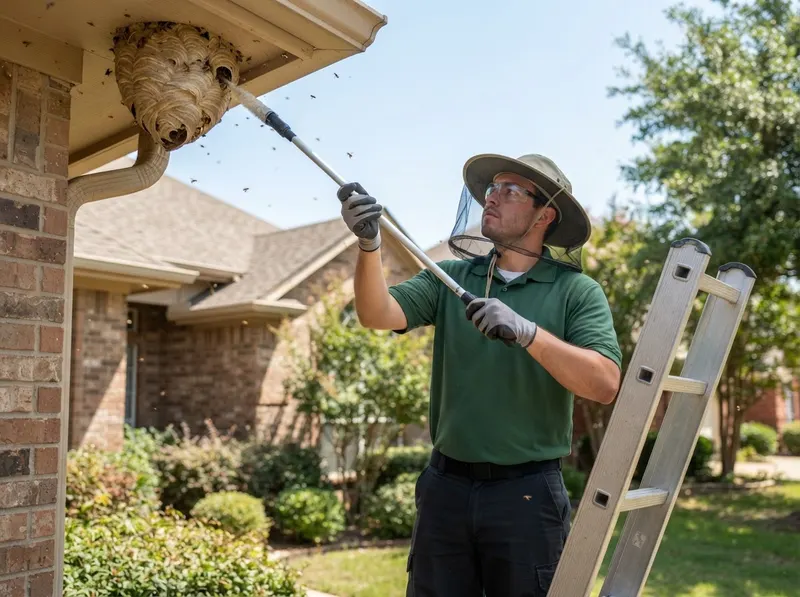
Stinging insect activity in Dallas County surges from late April through October, driven by high humidity and prolonged ambient heat above 90 degrees Fahrenheit. Species such as the common Texas red paper wasp (*Polistes carolina*) favor protected architectural recesses, including the deep soffits of mid-century ranches in Lake Highlands and Northwood Hills, second-story window cornices in Uptown, and exposed rafter tails across historic bungalows in Lakewood and Bishop Arts District. Yellowjackets frequently exploit abandoned rodent burrows or voids within limestone retaining walls along the creeks in Kessler Park and Oak Cliff. These colonies present genuine stinging hazards to household occupants, pets, and groundskeeping crews when flight paths intersect doorways, patios, or outdoor air-conditioning condenser units.
Effective eradication requires distinguishing between exposed aerial paper nests and concealed void infestations. An exposed paper wasp nest allows for direct knock-down and immediate application of targeted, EPA-registered micro-encapsulated residuals directly to the anchoring pedicle, preventing newly emerging adult foragers from rebuilding on that exact wood grain. Conversely, yellowjacket colonies concealed behind brick weep screeds, decorative stonework in Preston Hollow, or attic gable vents demand specialized directional void injection using specialized insecticidal dusting equipment. This method treats the internal nest envelope without driving aggressive defensive workers through interior recessed lighting or ceiling joints into living areas.
Professional removal serves property owners who require direct colony neutralization without committing to ongoing monthly chemical subscription contracts. While a preventative perimeter program provides continuous repelling barriers, acute stinging insect removals are executed as standalone operations focused strictly on the active threat. The trade-off centers on application reach: single-nest targeted removals resolve immediate sting risks within a 20-foot radius, but do not prevent new scout queens from colonizing untreated exterior sectors of large properties during early spring swarming cycles without broader structural exclusion.
Every job gets a firm, written price after a free on-site visit.
Tell us about your stinging insect & wasp nest removal job in Dallas and we'll send a clear, written quote, usually the same day.
 Green Tractor Pest Control