Rodent exclusion repairs the physical structure of a home so rodents cannot re-enter, whereas basic rodent control relies on toxic bait stations that leave dead animals decaying inside wall voids. Roof rats frequently…
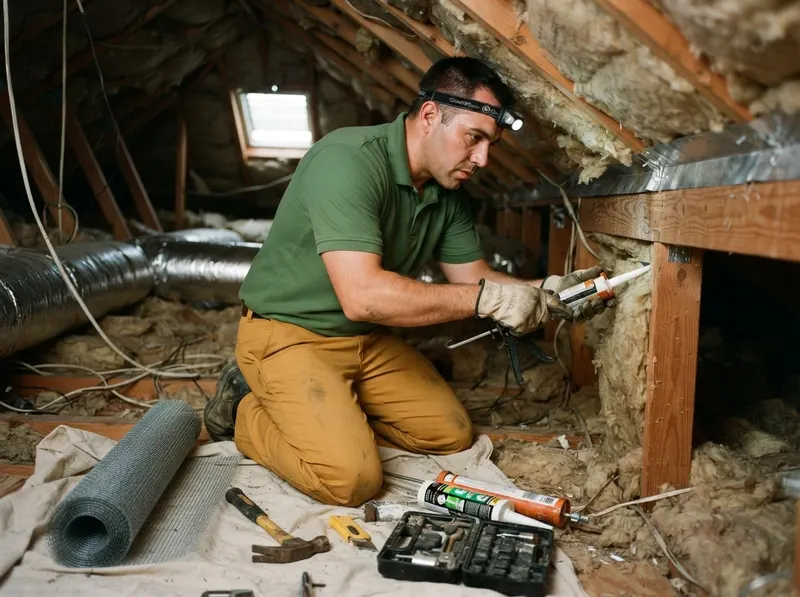
Rodent exclusion repairs the physical structure of a home so rodents cannot re-enter, whereas basic rodent control relies on toxic bait stations that leave dead animals decaying inside wall voids. Roof rats frequently target Dallas County properties by traveling mature pecan and live oak canopies to access attic vents, fascia boards, and brick soffit junctions. In historic pier-and-beam foundations across Oak Cliff, Bishop Arts District, and Kessler Park, field mice enter crawlspaces and follow interior plumbing chases directly into kitchens and master bathrooms. For 1960s and 1970s ranch homes in Lake Highlands and Northwood Hills, rooflines feature wide uncapped ridge vents and unsealed AC line sets where rodents gnaw plastic vapor barriers and nest in blown fiberglass.
A single female roof rat produces 20 to 40 offspring annually, and an active nest quickly contaminates loose-fill insulation with urine pheromones, feces, and ectoparasites like rodent mites. If structural wiring suffers teeth marks, fire hazards escalate, which makes physical sealing urgent. Precision exclusion uses industrial-grade materials: 1/4-inch 19-gauge hot-dipped galvanized hardware cloth, metal flashing over construction gaps, and metal chimney cap spark arrestors that teeth cannot penetrate. For mid-century and multi-story homes in Lakewood and Lower Greenville, technicians install one-way eviction doors on roof returns, allowing resident rodents to exit safely while blocking return travel.
Attic remediation addresses the biological hazard left behind. Negative-pressure commercial HEPA vacuum trucks stage outside the driveway, pulling soiled R-19 or R-30 insulation through heavy-duty flex hoses directly into sealed dump containers, preventing dust infiltration into living spaces below. Technicians mist an agricultural-grade, neutral-pH enzyme disinfectant across exposed wood joists and drywall to neutralize pheromone scent markers that attract future colonies. The attic is then re-blown with virgin borate-treated cellulose or pest-resistant fiberglass insulation back to the recommended North Texas thermal standard of R-38 or R-49. This restores indoor air quality and stops high summer energy bills caused by compacted nesting materials.
Every job gets a firm, written price after a free on-site visit.
Tell us about your rodent exclusion & attic remediation job in Dallas and we'll send a clear, written quote, usually the same day.
 Green Tractor Pest Control